Your resume in English: rebuild it for the job, not a translation
A resume in English is not a translated French CV. See what changes in labels, dates, photos and verbs, then adapt yours to the target role.
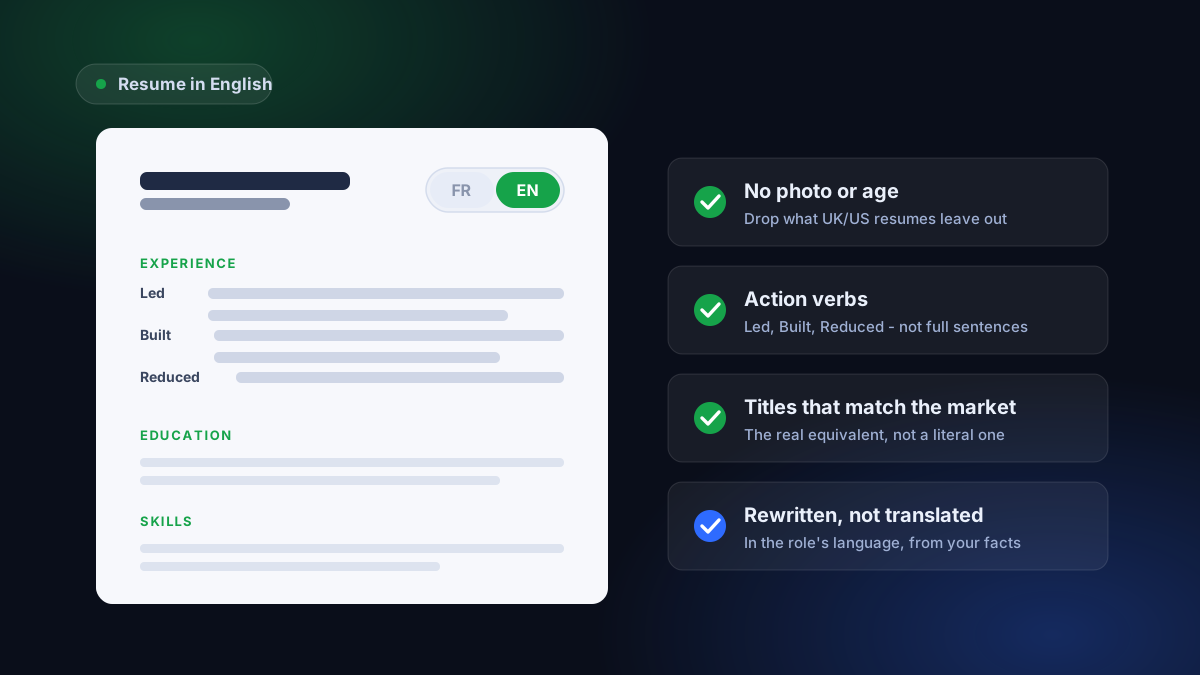
A resume in English is not a word-for-word translation of a French CV: it uses different section labels, date conventions, personal details, and action-led phrasing for the target market. Rebuild it around the job instead of translating the old document sentence by sentence.
What disappears
For a role in the UK, US, Canada, or Ireland, remove:
- the photo, age, date of birth, marital status, and nationality - recruiters avoid them for anti-discrimination reasons;
- "Curriculum Vitae" as a title: your name is enough;
- full first-person sentences. Write in action verbs - past tense for past roles ("Led", "Built", "Reduced"), present tense for your current one ("Lead", "Build") - not "I am responsible for...".
Nationality remains your choice in the editor. The UK National Careers Service advises omitting it for UK applications; writing in English for another country does not automatically import that convention. A nationality already supplied stays saved, and you can hide it without deleting it. Switching the document language does not add nationality or change its visibility.
What changes shape
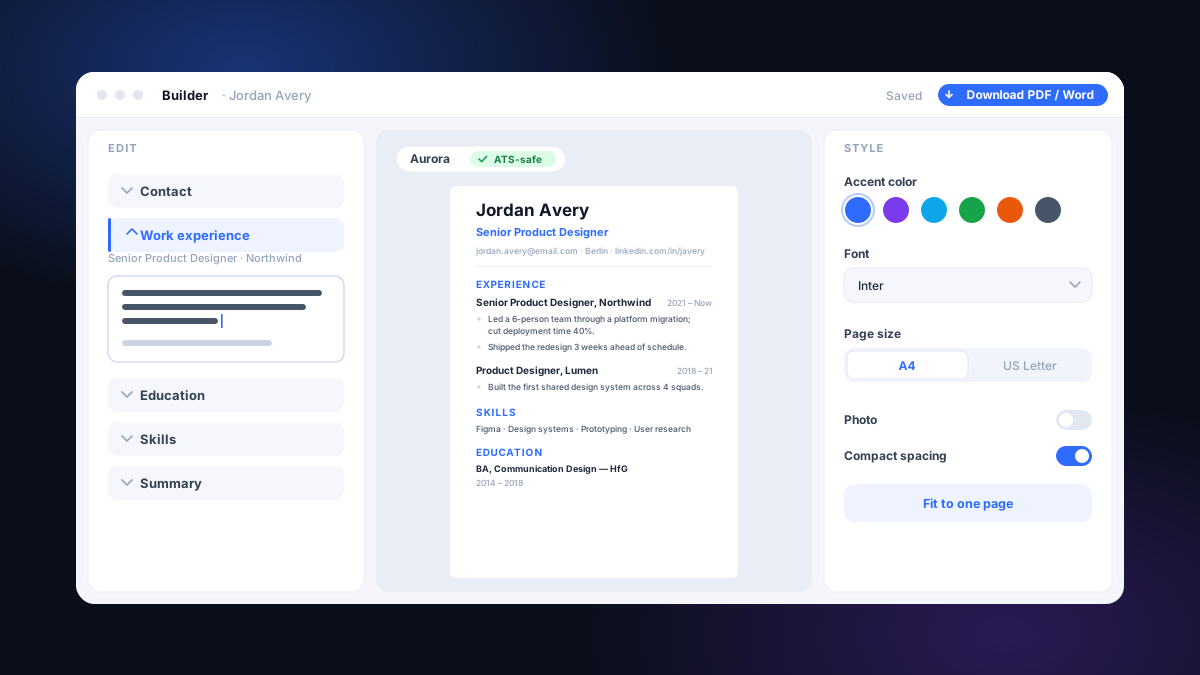
- Dates are written differently (Jan 2023 - Present) and the layout stays single-column, clean, readable by applicant-tracking software (ATS).
- Job titles should match the target market, not be translated literally. Many French titles have no word-for-word equivalent - look up the real title of the equivalent role (Account Manager, Client Advisor, and so on). Match the seniority honestly, don't upgrade it: recruiters verify titles against the employer's records.
- Degrees need context: a foreign recruiter may not know a French "BTS" or "Licence". A short equivalent helps.
The real work: rewrite for the job
Machine translation keeps the source-language logic and reads wrong. It's better to rewrite in the role's language, starting from the posting: which skills it asks for, which words it uses, what to put first. That's adaptation, not translation - and it stays anchored in what you actually did.
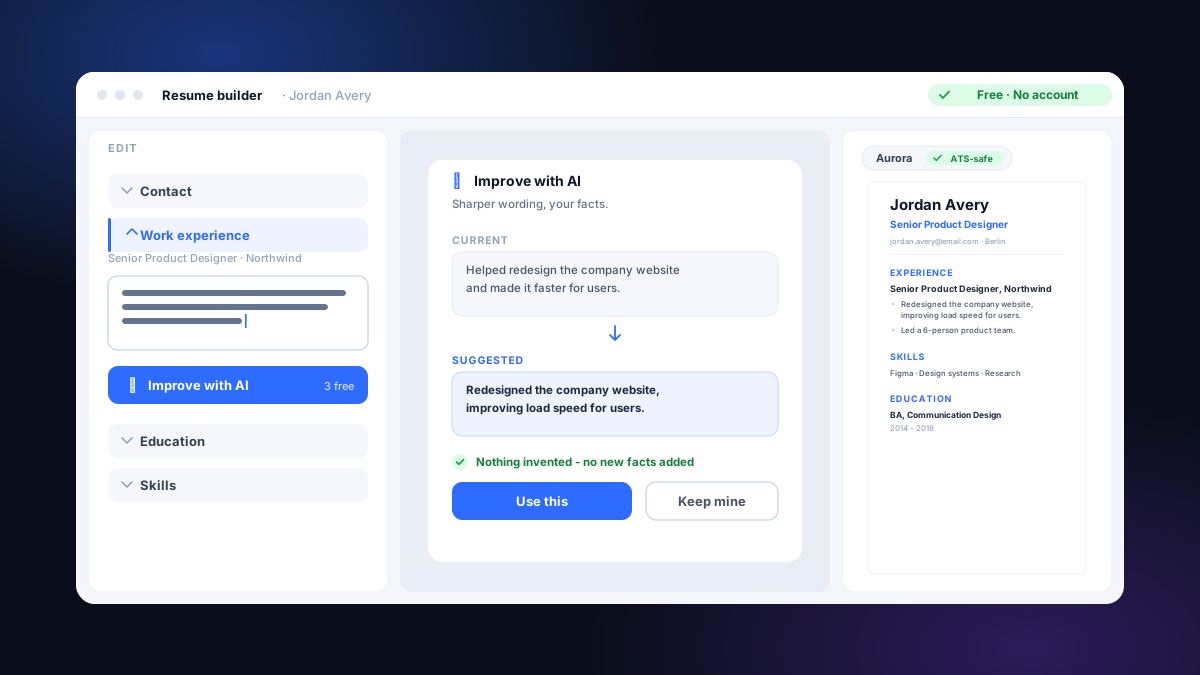
That's exactly what our resume-in-English tool does: start from scratch in English, or import your existing CV and switch the output language. Paste an English-language job offer and the AI rewrites your resume in the role's language, from your real experience - never invented, never a literal translation. Building and previewing are free.
Common questions
Should I put a photo on an English resume?
For the UK, US, Canada, or Ireland, no - drop the photo, age, and marital status (recruiters avoid them for anti-discrimination reasons). Some countries differ; when in doubt, a clean resume with no photo is accepted everywhere.
'CV' or 'resume'?
In the US and Canada, it's a resume (a short, targeted document). In the UK and Ireland, it's a CV. The word changes, but the principle holds: one or two pages, targeted at the role.
Is machine translation good enough?
No. A word-for-word translation keeps the French structure and reads wrong: job titles that don't exist, calqued phrasing, sections in the wrong order. It's better to rewrite in the role's language, from your real experience.