Can recruiters detect AI-generated resumes? The honest answer
Can recruiters detect AI-generated resumes? The evidence says no, not reliably. What they spot is generic. Here’s how to use AI and still sound like you.
Can recruiters detect AI-generated resumes? Not reliably, and software cannot either. What recruiters catch in seconds is a generic resume, whether or not AI helped write it. The fix is not to hide the tool. It is to keep your real experience, specific evidence, and your own voice.
What the evidence actually says about detection
Detection is an unsettled arms race, so be skeptical of anyone who claims certainty in either direction. But the numbers we do have point one way.
OpenAI built an AI Text Classifier and then retired it on July 20, 2023 because it didn’t work well enough: it correctly flagged only 26% of AI-written text as “likely AI,” while falsely flagging 9% of genuinely human writing. Independent studies of other detectors report false-positive rates in the 30 to 50% range. A tool that wrongly accuses real human writing roughly one time in ten - or worse - is not something a careful recruiter can lean on to reject a candidate.
What about recruiters’ own instincts? In one industry survey of hiring managers, 53% said they believe they can tell when a candidate used AI. That’s belief, not proof - and the more telling numbers sit next to it: only 54% said they’d even care if you did, and 99% reported using AI in their own hiring. Meanwhile, in a 2025 survey of more than 1,400 job seekers, 29.3% said they’d used AI to write or customize a resume or cover letter in the past year, up from 17.3% the year before. AI in the application is now normal, and most of the people reading your resume use it too.
Recruiters can’t reliably detect AI. They can instantly detect generic.
They detect generic, not AI
Here’s the part that matters. A recruiter skimming forty resumes isn’t running a detector - they’re pattern-matching for signal. A resume packed with “results-driven professional,” “spearheaded cross-functional initiatives,” and “leveraged synergies” reads as empty whether a human or a machine typed it. It blends into the stack and gets passed over.
So the real risk of using AI badly isn’t getting caught. It’s sounding like everyone else. The candidates who win aren’t the ones who hid their tools - they’re the ones whose resume clearly came from a specific person who did specific things.
Why lazy AI sounds robotic
Ask a model to “write me a resume” from nothing and it fills the gaps with the most average phrasing it can find. That produces three tells:
- Interchangeable bullets. Lines like “Demonstrated adaptability by contributing to successful project outcomes” could describe anyone, anywhere, doing anything.
- Uniform rhythm. Every sentence runs the same length and shape, with no human unevenness.
- Buzzword fog. “Results-driven,” “spearheaded,” “leveraged,” “synergy” - filler that signals nothing concrete.
None of these are caught by a detector. All of them are caught by a tired recruiter in about four seconds.
The human-voice fix
The cure is to feed AI your real material and keep it in an editing role. Compare:
The “after” line couldn’t have come from a blank-page prompt. It carries a real number (37%), an insider detail (the SAP reconciliation workflow, the month-end freeze) that only someone who did the job would mention, and a natural rhythm. That’s what reads as human - because it is.
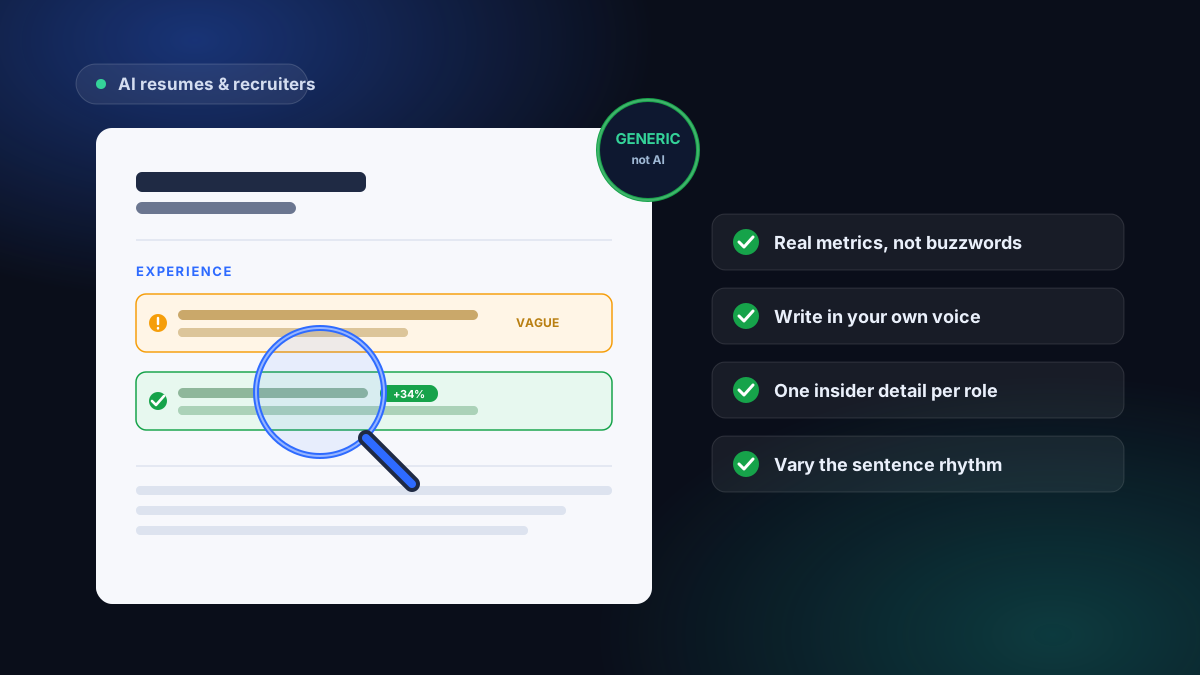
Three moves do most of the work: put a genuine metric in every bullet you can, add one detail per role that an outsider wouldn’t know to write, and vary your sentence structure. Then read it aloud. If a line sounds like a press release, say it the way you’d say it to a colleague and type that instead.
How our tool fits - honestly
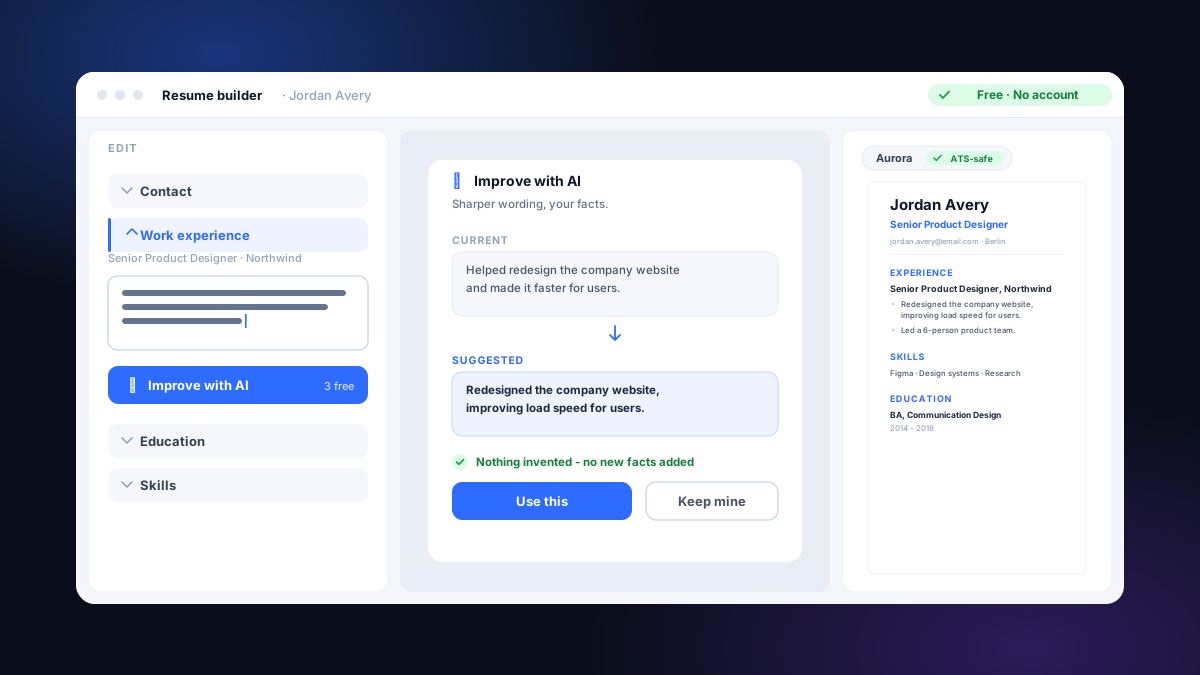
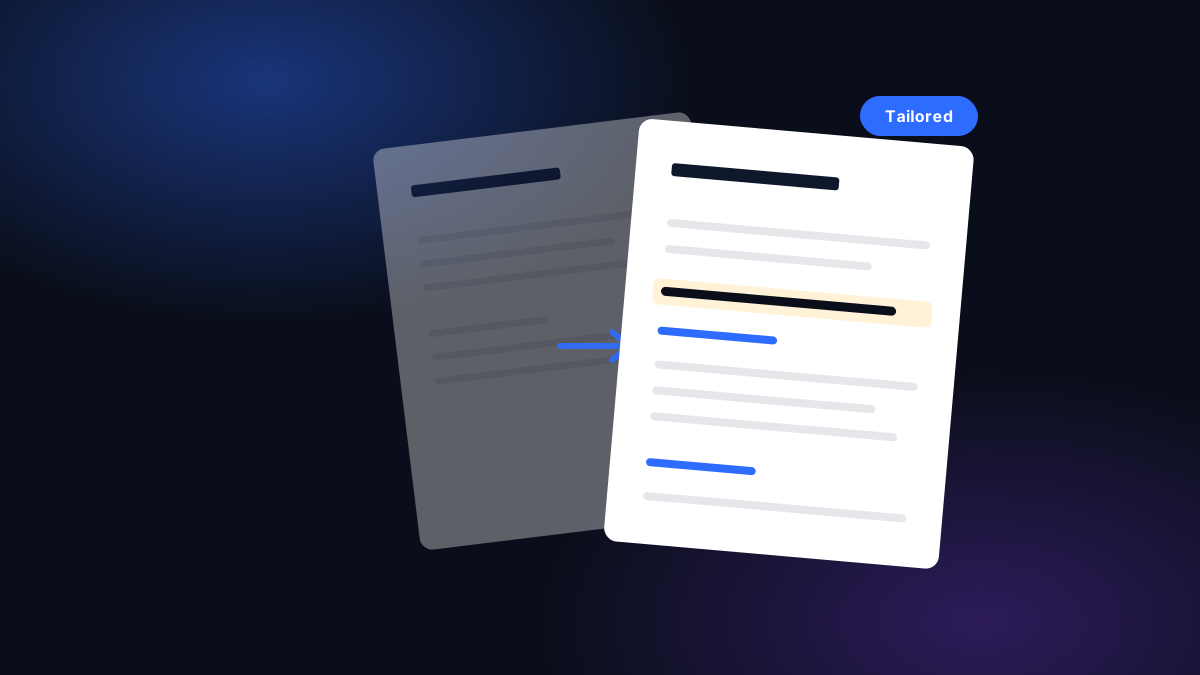
This is the whole reason the product works the way it does. The AI reformulates your real experience; it never invents. When you tailor a resume to a job, it rewrites your own bullets in the language of the posting while keeping your exact facts and numbers - and a built-in check reverts any line that tries to add a fact you didn’t write. Improve-with-AI does the same on a single bullet: sharper wording, same truth.
Create a free account to build, edit, and preview your resume in the free resume editor. The free ATS check also works without an account. The deeper method for matching the posting’s language is in how to tailor your resume, and the machine-readability side is covered in how to optimize your resume for ATS.
That is separate from an employer using AI to screen candidates. If your concern is whether the employer had to notify you or provide a review route, use the jurisdiction-specific guide to AI resume-screening disclosure rights.
One myth to put down while we’re here: nearly all Fortune 500 companies now screen with applicant tracking software, but that software ranks and parses resumes - it does not auto-reject for AI authorship. The “75% get auto-rejected” line you’ll see online isn’t founded.
Make AI sound human, step by step
- Use AI as an editor, not a ghostwriter. Start from your own bullets; never let it write from a blank page.
- Put a real number in every bullet you can. A percentage, a budget, a headcount, a deadline - figures only you would know.
- Add one insider detail per role. A specific tool, process, or constraint that proves you were actually there.
- Vary the rhythm and read it aloud. Break the uniform pattern, cut a buzzword or two, fix anything that sounds like a brochure.
- Run the free ATS check, then tailor. Make it machine-readable, fix the blockers, and match each job’s language.
- Every bullet starts from something you actually did, not an AI guess.
- At least one real number per role - percentage, amount, headcount, or date.
- One insider detail per role that an outsider couldn’t have written.
- Buzzwords (“results-driven,” “spearheaded,” “leveraged”) cut or replaced.
- Sentence lengths vary; you’ve read the whole thing aloud.
- Score checked on the free ATS check, blockers fixed, resume tailored to the job.
So, can recruiters detect AI-generated resumes? Not reliably - and most wouldn’t hold it against you if they could. The thing that actually gets you screened out is a generic resume with no voice and no proof. Keep your real experience, keep your own words, and let AI do what it’s good at: making the true version of your story read clearly.
Common questions
Can recruiters detect AI-generated resumes?
Not reliably. AI-detection tools have high false-positive rates - OpenAI retired its own classifier because it flagged only 26% of AI text and falsely flagged 9% of human writing. Many recruiters believe they can tell, but belief isn’t detection. What they actually spot is a generic, voiceless resume, whether or not AI wrote it.
Do AI-generated resumes sound robotic?
They sound robotic when AI is used lazily - asked to write from scratch, it produces interchangeable buzzwords and uniform sentences. Used as an editor on your real experience, with real numbers and an insider detail or two, AI-assisted writing reads like you. The robotic tone comes from generic input, not from AI itself.
Do AI-generated resumes get rejected?
Not for being AI-written. Applicant tracking software ranks and parses resumes; it does not auto-reject based on authorship, and the widely repeated “75% are auto-rejected” figure has no solid source. Resumes get filtered for being unreadable by the software or off-topic for the job - problems you fix by making it machine-readable and relevant.
How do I make an AI resume sound human?
Keep your own voice and facts. Insert a real metric in each bullet, add one detail only someone in the role would know, vary your sentence length, and cut tired buzzwords like “results-driven” or “spearheaded.” Read it aloud: if a line sounds like a brochure, rewrite it plainly.
Is it okay to use AI to write my resume?
Yes, as long as everything on it is true. Recruiters increasingly use AI in their own hiring, and most say they wouldn’t even mind if you used it. The line that matters is honesty: AI should reformulate your real experience, never invent a job, a skill, or a number you can’t defend in an interview.
Does your AI invent things on my resume?
No. The AI reformulates your real experience in clearer language or in the words of a posting - it keeps your exact facts and numbers. A built-in check reverts any line that tries to add a fact you didn’t write, so the rewrite stays true to what you actually did.