Switzerland CV format: the Swiss application dossier explained
Photo, date of birth, dotted dates, ss instead of ß and a language per region: the Swiss CV format and application dossier, explained for English speakers.
Switzerland keeps the most traditional application culture in Europe, and it shows in what a Zurich or Geneva recruiter expects to receive: not a lone CV but a dossier - CV with a professional photo, date of birth and often nationality, plus diplomas and employment certificates. None of it is law, but the conventions are strong, and three small details give away a non-Swiss document instantly. This guide covers the Swiss rules in full; for how Switzerland compares with ten other markets, start from our resume format by country guide.
The three details that give you away
Before structure, before the photo question, three mechanical tells separate a Swiss document from an imported one:
Dates use dots. 03.2021 – 06.2024, not slashes. Swiss date style is 14.03.1984 in all four language regions. A slashed date will not disqualify you, but it reads as foreign on line one.
German-language CVs use ss, never ß. Swiss Standard German dropped the eszett; it is Strasse, not Straße. A ß on a CV tells a Swiss reader the document was written for Germany - which matters, because a German-market CV is otherwise the closest starting point an English speaker's translator will reach for.
The language follows the region. German for Zurich, French for Geneva, Italian for Ticino. Cross-region applications in the wrong language rarely survive screening. For an English speaker, the good news is that Switzerland's international sectors - pharma, banking, commodities, tech - post many vacancies in English, and those can be answered with an English CV. A German-, French- or Italian-language posting, though, expects the CV in that language.
The rules in brief
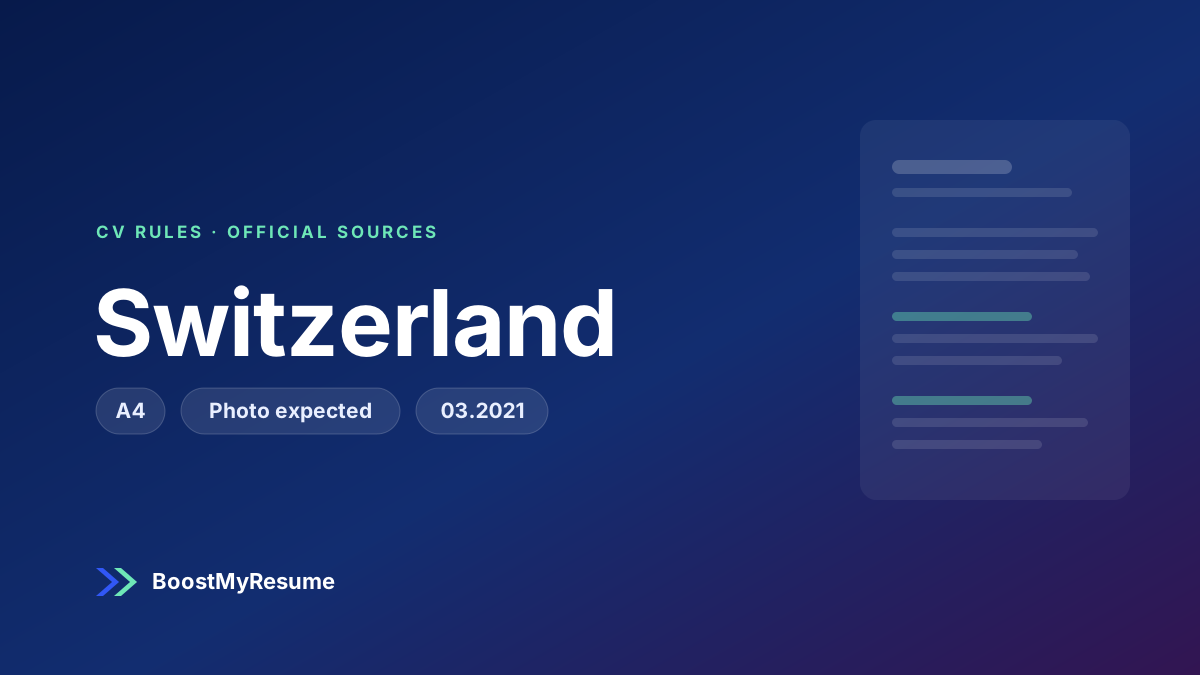
- Photo: traditional and expected in the classic dossier.
- Date of birth: traditional, optional - include it under local convention, drop it for an international-style application.
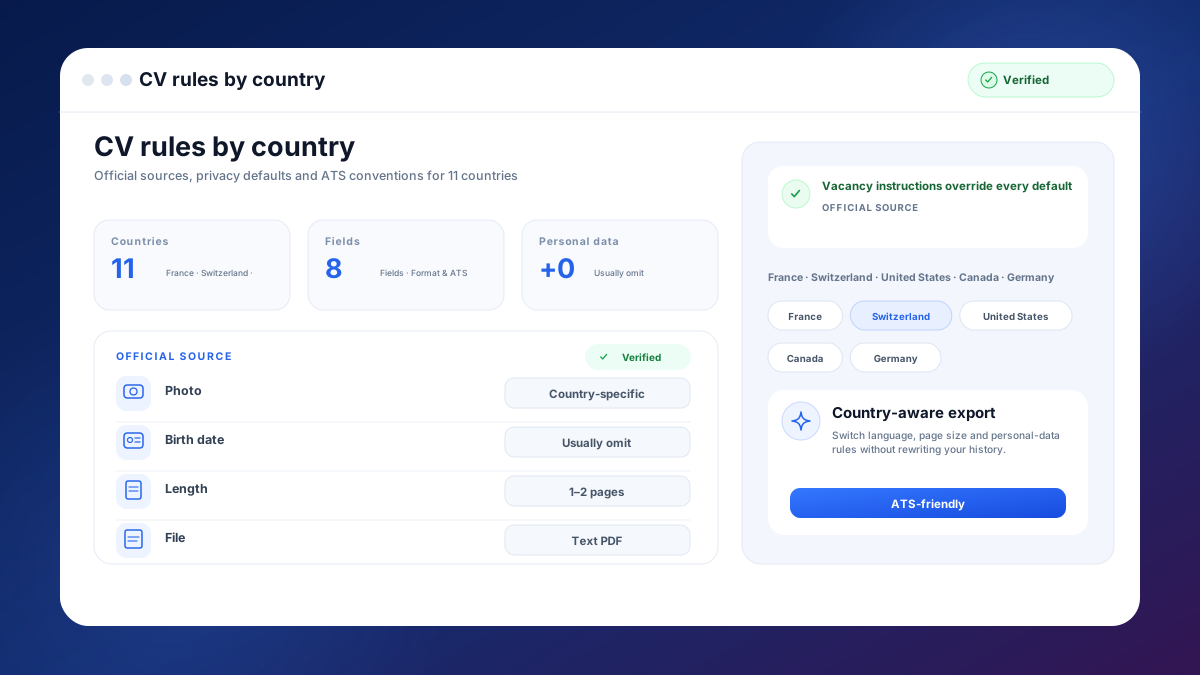
- Length: maximum 2 pages.
- Page size: A4.
- Dates: dotted -
03.2021 – 06.2024. - Language: German, French or Italian by region; English for international companies and EN-language vacancies.
- Attachments: diplomas and employment certificates commonly accompany the application.
- File:
Jordan_Avery_CV_CH_DE.pdf,_CH_FR.pdfor_CH_IT.pdf.
Photo, date of birth and the personal block
Switzerland sits at the opposite end of the spectrum from the UK or the US: the classic dossier carries a professional photo, a date of birth and often a nationality line. These are conventions in the cited application guidance. They do not establish that leaving out nationality costs interviews.
The pragmatic line for an expat: when in doubt, include the photo and keep the rest lean. A current, neutral professional headshot; a date of birth if you are comfortable following convention; and instead of nationality, one line stating your work authorisation - for most non-EU applicants, permit status is the question the nationality line was standing in for anyway.
Nationality: your choice
EURES Switzerland includes nationality in its traditional CV outline. This is application guidance, not evidence of a universal legal requirement. Decide whether to follow that convention for this application.
In the editor, nationality is optional in every document language. A supplied value, including dual nationality, stays saved; you choose whether it appears on the CV. Hiding it does not erase it, and changing language or target market does not change that choice. Nationality, country of residence and work authorisation are separate facts.
The dossier: what travels with the CV
The Swiss application is a package. Alongside the CV and a tailored cover letter, employers commonly expect:
- Diplomas - degree certificates, scanned.
- Employment certificates - the certificats de travail or Arbeitszeugnisse that Swiss and German employers issue when someone leaves. If your previous employers are outside the German-speaking world and never issued such documents, do not panic: reference letters or simply your references list stand in, and recruiters know foreign careers document differently.
Have clean scans ready before you start applying; Swiss portals routinely provide upload slots for them.
Structure and section headings
The CV itself is reverse-chronological, at most two A4 pages, with the standard skeleton: contact details, profile, experience, education, skills, languages. The headings in the three application languages:
| Language | Standard headings |
|---|---|
| Deutsch | Kontaktdaten · Profil · Berufserfahrung · Ausbildung · Fähigkeiten · Sprachen · Zertifikate · Referenzen |
| Français | Coordonnées · Profil professionnel · Expérience professionnelle · Formation · Compétences · Langues · Certifications · Références |
| Italiano | Contatti · Profilo professionale · Esperienza professionale · Formazione · Competenze · Lingue · Certificazioni · Referenze |
The languages section deserves care in a country with four national languages and an international workforce: list your levels honestly, and if you are learning the local language of your target region, say so - it signals commitment to staying.
Length, page, dates and the file name
Two pages, maximum, on A4. The dossier can be thick; the CV itself stays lean.
Dates, dotted, throughout. 03.2021 – 06.2024 on every line, in every language region. For a current role, translate the word into the document's language - heute in German, aujourd'hui in French, presente in Italian.
File name. Jordan_Avery_CV_CH_DE.pdf, _CH_FR.pdf or _CH_IT.pdf, matching the language you wrote in. ASCII characters and underscores.
ATS notes for the Swiss market
Large Swiss employers screen with the same software as everyone else, so the machine-readability baseline holds even inside a traditional application culture:
- One text column, standard headings from the table above, normal reading order.
- Name, phone, email, city and links in the document body, not only in a header or footer.
- Selectable text; no scanned pages for the CV itself - scans belong in the attachments, not the resume body.
- A text-based PDF unless the portal asks for DOCX.
- One date convention throughout - dotted, in Switzerland's case.
The full mechanics are in our ATS optimization guide.
Swiss quirks worth knowing
- A German CV is not a Swiss CV. The ss-for-ß switch and the dotted dates are exactly what changes - see our German Lebenslauf guide for how the neighbouring market differs.
- Salary expectations come up early. Swiss processes often ask for them in the application form; answer the form, but keep them off the CV itself.
- Nothing is legally mandated. The traditional dossier is convention, not law. An international-style, data-minimized CV is always defensible - it is simply not what the most traditional recruiters expect.
- The vacancy overrides everything. Photo-free recruitment exists in Switzerland too; when an employer says no photo, that instruction wins.
Sources
Common questions
What language should a CV for Switzerland be in?
The language of the region - German for Zurich, French for Geneva, Italian for Ticino. Cross-region applications in the wrong language rarely survive screening. English is viable for international companies and English-language vacancies, which are common in pharma, finance and tech.
Do I need a photo on a Swiss CV?
It is traditional and expected in the classic Swiss dossier. No law requires it, and data minimisation is always defensible, but a Swiss recruiter who expects the traditional format will notice its absence. When in doubt, include the photo and keep the rest lean.
Should I put my date of birth on a Swiss CV?
It is traditional and optional. Include it if you follow the local convention; drop it for an international-style application. State your work authorisation instead of nationality if that is the actual question.
What date format does a Swiss CV use?
Dots, not slashes - 03.2021 – 06.2024 on the CV, and 14.03.1984 as the full-date style in all four language regions. Slashed dates quietly mark the document as non-Swiss.
What goes into a Swiss application dossier besides the CV?
Diplomas and employment certificates - certificats de travail, or Arbeitszeugnisse in German - commonly accompany the application, along with a cover letter. Have scanned copies ready when you apply.
Can I use a German CV for Switzerland?
Not as-is. Swiss Standard German uses ss where Germany writes ß - Strasse, not Straße - and Swiss dates use dots. A ß on a CV tells a Swiss reader the document was written for Germany.