German Lebenslauf explained: CV rules for jobs in Germany
Photo optional, Anschreiben expected, Zeugnisse attached: the German Lebenslauf and the Bewerbung package explained for English speakers, from official sources.
In Germany, the CV has its own name - the Lebenslauf - and it never travels alone. A German application is a Bewerbung: the Lebenslauf, a tailored cover letter called the Anschreiben, and supporting documents called Zeugnisse. Understanding that package logic is most of what an English speaker needs to learn, because the CV itself sits comfortably between the traditional Swiss dossier and the photo-free Anglo-Saxon document. This guide covers the German rules in full; for the whole map of eleven markets, start from our resume format by country guide.
The Bewerbung: a package, not a page
Plan a German application as three parts:
- The Lebenslauf - one to two A4 pages, reverse-chronological, factual in tone.
- The Anschreiben - a tailored cover letter, normally assumed. It is not a formality; German hiring culture reads it as evidence you engaged with this specific role. Our cover letter structure guide gives the frame; write it in the language of the vacancy.
- The Zeugnisse - references and certificates: employment references from previous employers and degree certificates, routinely expected as attachments, at least by the interview stage. If your career happened outside the German-speaking world and no employer ever issued you a formal Zeugnis, reference letters or a references list stand in - German recruiters know foreign careers document differently.
The language question runs through all three parts the same way: German by default. English is viable when the vacancy is posted in English or the employer works in English - routine in Berlin startups, at multinationals and in research - but a German-language posting expects a German Bewerbung. If your German is mid-level, declare it honestly in the languages section rather than writing a flawed German CV; a clean English document with an honest B1 beats a machine-translated Lebenslauf.
The rules in brief
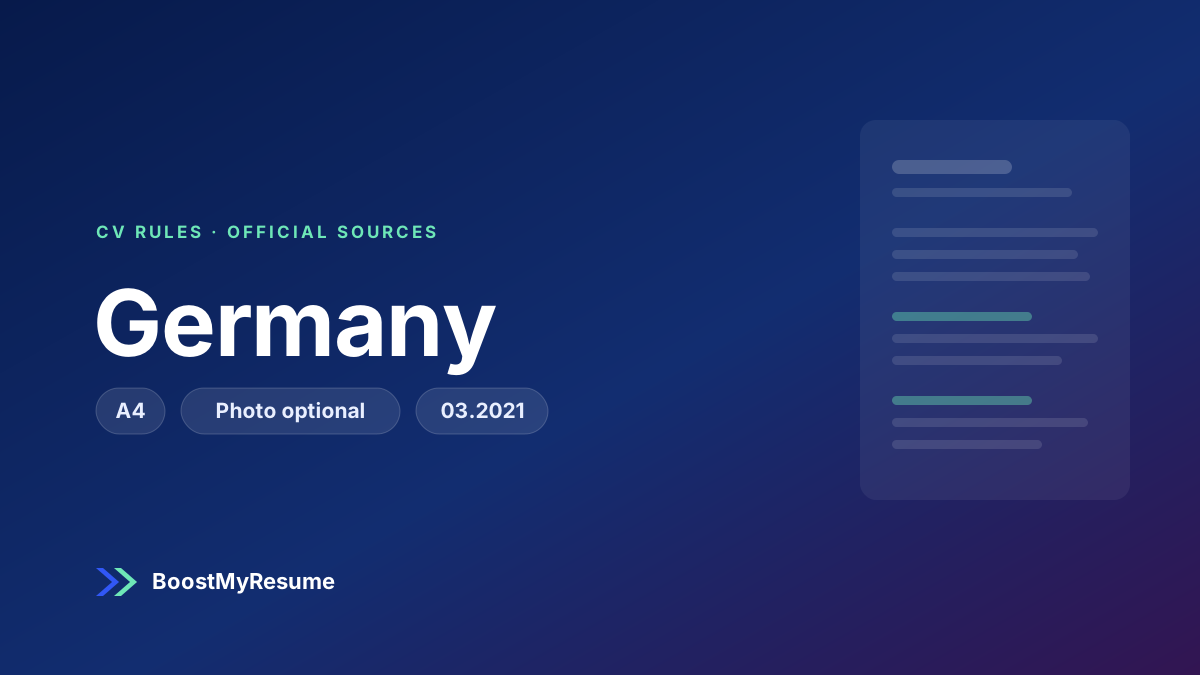
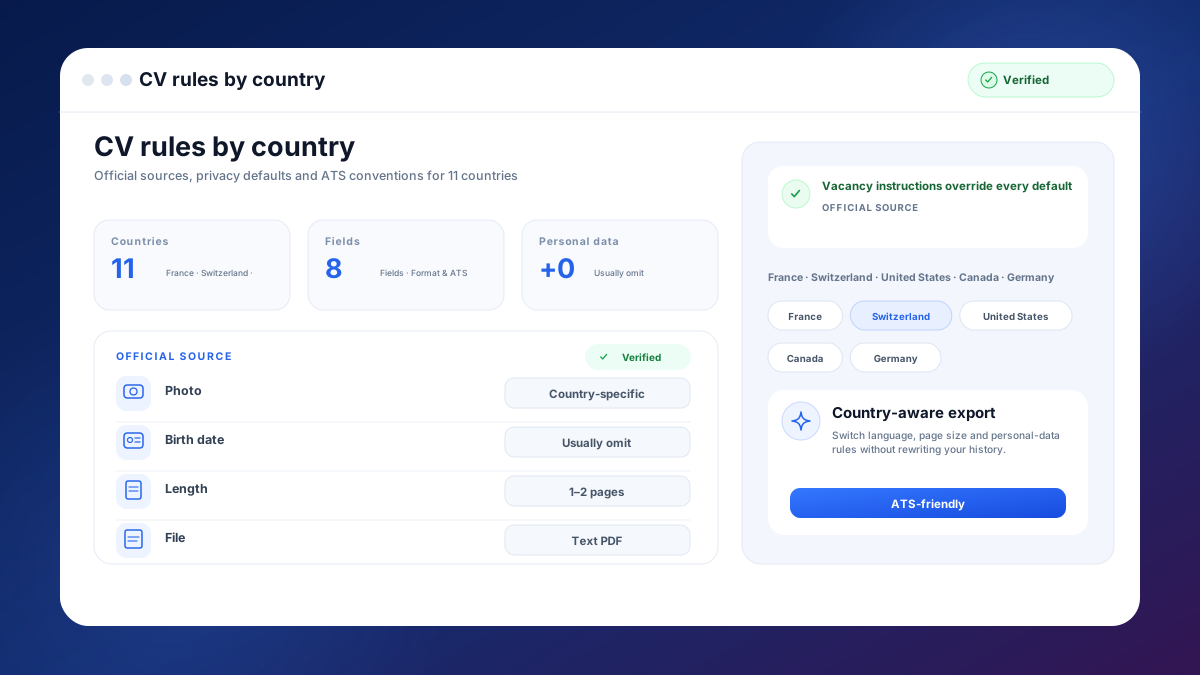
- Photo: optional; still common. A neutral professional portrait only - or none.
- Date of birth: traditional but optional; omit for an international or ATS-heavy application.
- Length: 1–2 pages.
- Page size: A4.
- Dates:
03/2021 – 06/2024or03.2021 – 06.2024- pick one and keep it. - Cover letter: the Anschreiben is normally part of the package.
- Attachments: Zeugnisse expected, at least by interview stage.
- File:
Jordan_Avery_CV_DE_DE.pdf.
Photo and date of birth: drifting off the page
A generation ago the German Lebenslauf carried a photo, a date of birth, a birthplace and sometimes marital status. The reason those items have been drifting off the document has a name: the Allgemeines Gleichbehandlungsgesetz, Germany's General Equal Treatment Act, usually shortened to AGG. Employers cannot require a photo or a birth date, and public guidance increasingly encourages leaving them out so that screening rests on qualifications alone.
In practice the market is mid-transition. A photo is optional and still common; if you include one, make it a neutral professional portrait, not a social-media crop. Date of birth is traditional but optional - the clean move for an expat, and for any ATS-heavy pipeline, is to omit it. Nationality and work authorisation answer different questions; do not substitute one for the other.
Nationality: your choice
The Bundesagentur für Arbeit explicitly treats nationality as voluntary. A German-language CV does not make the field compulsory.
In the editor, nationality is optional in every document language. A supplied value, including dual nationality, stays saved; you choose whether it appears on the CV. Hiding it does not erase it, and changing language or target market does not change that choice. Nationality, country of residence and work authorisation are separate facts.
Structure and section headings
The Lebenslauf is strictly reverse-chronological and factual - German CV culture prizes completeness and verifiability over narrative flair. Unexplained gaps get noticed; a one-line entry naming what a gap was is better than silence. The standard skeleton and headings:
| Language | Standard headings |
|---|---|
| Deutsch | Kontaktdaten · Profil · Berufserfahrung · Ausbildung · Fähigkeiten · Sprachen · Zertifikate · Referenzen |
Note Ausbildung: it covers education in the broad German sense, including vocational training - a system with real prestige in Germany, so if you hold an apprenticeship-style qualification, name it properly rather than folding it into a bullet.
Length, page, dates and the file name
One to two A4 pages. German thoroughness lives in the attachments, not in a long CV. Two pages are entirely normal mid-career.
Dates: one convention, kept. German CVs use 03/2021 – 06/2024 or the dotted 03.2021 – 06.2024; either is fine, mixing them is not. Full dates are written day-first, 14.03.2026. Never import US month-first numerics. For a current role on a German-language CV, write heute.
File name. Jordan_Avery_CV_DE_DE.pdf - ASCII characters, so no umlauts in the file name even when the document is full of them. Name attachment files just as plainly.
ATS notes for the German market
Germany's large employers and job boards screen by machine like everyone else, and the baseline is unchanged:
- One text column, standard headings from the table above, normal reading order.
- Name, phone, email, city and links in the document body, not only in a header or footer.
- Selectable text; no scanned pages in the CV itself - scans belong in the Zeugnisse, not the resume body.
- A text-based PDF unless the portal asks for DOCX.
- One date convention throughout.
Umlauts and ß in the text parse fine; keep them out of file names only. The full mechanics are in our ATS optimization guide.
German quirks worth knowing
- The Zeugnis system is real infrastructure. German employers issue formal employment references as a matter of law and custom, and recruiters read their coded language closely. As a foreign applicant you are not expected to have them - but you are expected to have something: reference letters, contactable referees.
- Do not confuse Germany with Switzerland. A German-market Lebenslauf written with ß and slashed dates is correct in Munich and wrong in Zurich - Swiss German drops the ß entirely. The differences are covered in our Swiss CV guide.
- Austria is close, not identical. The package logic and headings match; the photo expectation is stronger in Austria.
- Nothing is legally mandated. The AGG constrains what employers may demand; it does not prescribe a CV format. The vacancy and the employer's instructions always override the default.
Sources
Common questions
Should my CV for Germany be in German or English?
German, by default - the Lebenslauf is normally written in German. An English CV is viable when the vacancy is posted in English or the employer is an international company with English as a working language, which is common in Berlin tech and at multinationals. Let the language of the posting decide.
Do I need a photo on a German CV?
It is optional but still common. Germany's General Equal Treatment Act means employers cannot require one, and public guidance increasingly encourages leaving it out. If you include one, use a neutral professional portrait - or none at all.
Should I put my date of birth on a German Lebenslauf?
It is traditional but optional. Omit it for an international or ATS-heavy application; no recruiter needs it to assess the work.
What is an Anschreiben and do I need one?
The Anschreiben is the tailored cover letter that is normally part of a German application. Plan on writing one - the CV alone is only part of the Bewerbung package.
What are Zeugnisse and when do employers want them?
Zeugnisse are references and certificates - employment references from previous employers and degree certificates. German employers routinely expect them as attachments, at least by the interview stage. Foreign applicants can substitute reference letters where no formal Zeugnis exists.
How long should a German CV be?
One to two A4 pages, reverse-chronological, with one date convention kept throughout - 03/2021 or 03.2021, but not both.