Spain CV format: rules for the Spanish CV and its languages
Two A4 pages, photo not compulsory, and vacancies in Català, Galego or Euskara: the Spanish CV format explained for English speakers, from official sources.
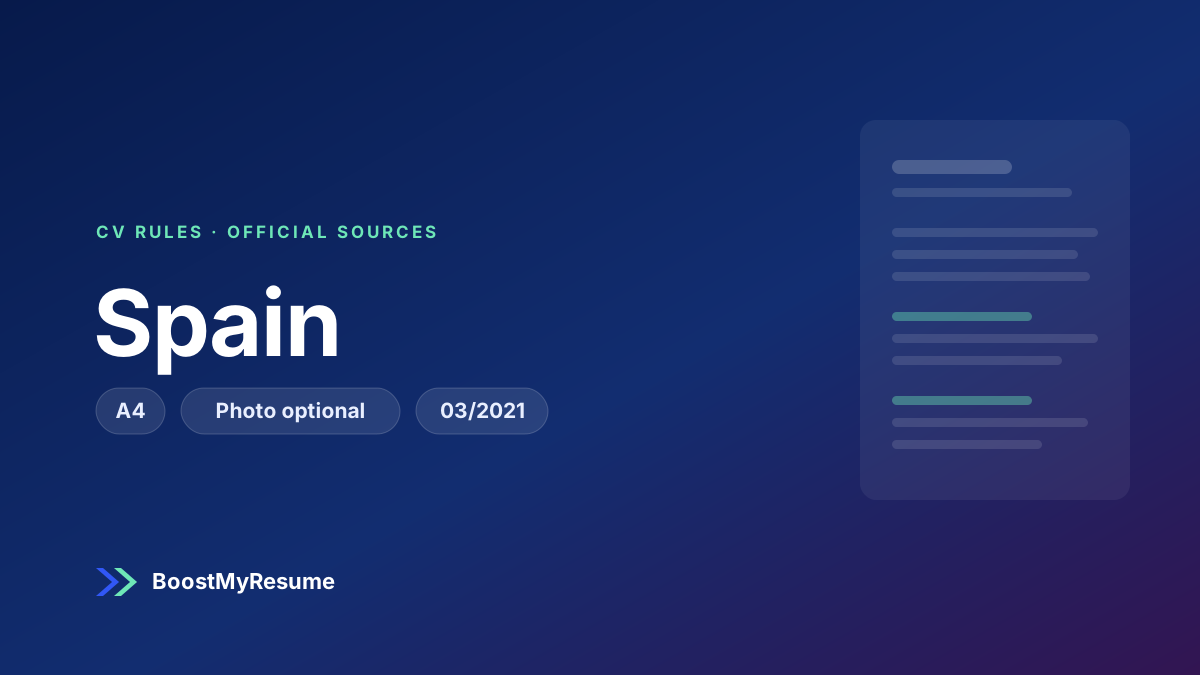
Spain's CV rules are among the simplest in Europe - two A4 pages at most, a photo that is officially "not compulsory," no date of birth, nothing attached up front. What makes the Spanish market distinctive is the language map: vacancies in Catalonia, Galicia and the Basque Country may run in Català, Galego or Euskara, and matching the vacancy's language matters as much here as it does in Belgium. This guide covers the full rule set for English speakers applying in Spain; the eleven-market comparison is in our resume format by country guide.
The rules in brief
- Language: Español by default; match regional-language vacancies; English where the posting or employer works in English.
- Photo: not compulsory; off by default.
- Date of birth, age: omit.
- Length: maximum 2 pages.
- Page size: A4.
- Dates: day-first -
03/2021 – 06/2024on the CV. - Attachments: only when requested.
- File:
Jordan_Avery_CV_ES_ES.pdf.
Four application languages, one rule
Spanish is the default application language nationwide, and for most vacancies the CV is written in Spanish, full stop. But Spain has co-official languages with real presence in hiring: a posting from a Catalan institution may run in Català, a Galician public body in Galego, a Basque employer in Euskara. The rule is the Belgian one - the vacancy's language decides. Answering a Catalan-language posting in Spanish is not neutral; it answers a question the employer did not ask.
For an English speaker, English has its usual niche: international companies, English-language postings, and sectors where the working day already runs in English - parts of Madrid and Barcelona tech, tourism, international schools. The posting is the signal. When you do write in Spanish, have the final text checked by a native reader if your level is below C1, and declare the honest level in the languages section either way - our guide on writing a resume in another language covers why translating the career beats translating the sentences.
Photo and personal data
The official phrasing on the photo is "not compulsory," and the photo-free version is the safer default for both privacy and parsing. Older Spanish conventions leaned toward a photo, and some traditional employers still expect one - but you lose nothing by leaving it off, and the vacancy will say so when a sector genuinely wants it.
Date of birth, marital status and national ID numbers stay off the document. That last one deserves emphasis for anyone localizing an older Spanish template: no DNI or NIE number belongs on a CV - identity documents are for contracts, not applications. City and country are enough for location, and a non-EU applicant's work-permit status is best stated in one plain line when relevant.
Structure and section headings
The skeleton is the standard reverse-chronological one: contact details, a short professional profile, experience, education, skills, languages. The headings in Spain's four application languages:
| Language | Standard headings |
|---|---|
| Español | Datos de contacto · Perfil profesional · Experiencia profesional · Formación · Habilidades · Idiomas · Certificaciones · Referencias |
| Català | Dades de contacte · Perfil professional · Experiència professional · Formació · Competències · Idiomes · Certificacions · Referències |
| Galego | Datos de contacto · Perfil profesional · Experiencia laboral · Formación · Competencias · Idiomas · Certificacións · Referencias |
| Euskara | Harremanetarako datuak · Profil profesionala · Lan-esperientzia · Hezkuntza · Gaitasunak · Hizkuntzak · Ziurtagiriak · Erreferentziak |
The languages section works hard in Spain: for regional roles, listing the co-official language with an honest level can be the difference between piles, and for expats the declared Spanish level will be tested in the first phone call.
Length, page, dates and the file name
Two pages, maximum. Spanish guidance caps the CV at two A4 pages. If the content does not fit, cut the oldest material - do not shrink the font.
A4, not Letter. Spain prints on A4; a US Letter export reformats at the first printer and marks the document as prepared for another market.
Dates, day-first. Spanish numeric order is day-first - 14/03/2026. On the CV, use 03/2021 – 06/2024 or spelled-out months, and never US month-first numerics. For a current role on a Spanish-language CV, write actualidad.
File name. Jordan_Avery_CV_ES_ES.pdf - ASCII characters and underscores, no accents or ñ in the file name even though the document carries them.
Cover letter and attachments
A short cover letter accompanies Spanish applications where the vacancy gives it a place; keep it specific and in the language of the posting. Certificates and diplomas stay out of the initial application - Spanish employers request them when they need them, typically later in the process. The frame in our cover letter structure guide applies unchanged.
ATS notes for the Spanish market
Spain's large employers and job platforms screen at volume, so the machine-readability baseline applies in full:
- One text column, standard headings from the table above, normal reading order.
- Name, phone, email, city and links in the document body, not only in a header or footer.
- Selectable text; no scanned pages, no skill-rating graphics, no tables as layout.
- A text-based PDF unless the portal asks for DOCX.
- One date convention throughout.
Accents and ñ in the text parse fine; keep them out of the file name only. The full mechanics are in our ATS optimization guide.
Spanish quirks worth knowing
- The regional-language map is real screening. In Catalonia, Galicia and the Basque Country, public-sector and public-facing roles in particular may expect the co-official language - read the posting's language as an instruction, not an accident.
- Two surnames are normal. Spanish naming convention uses two surnames; as a foreign applicant you do not need to invent one, and Spanish recruiters will not blink at a single surname.
- The lean CV wins. Spain's official guidance points the same way as the privacy-first defaults across the EU - no photo, no birth date, two pages. A data-minimized master document converts to a Spanish CV almost unchanged.
- The vacancy overrides everything. As everywhere in the guide, the posting and the employer's instructions beat any default on this page.
Sources
Common questions
Should my CV for Spain be in Spanish or English?
Spanish, by default - and match regional-language vacancies, which may run in Català, Galego or Euskara. An English CV is viable when the vacancy is posted in English or the employer is an international company that works in English, as in parts of Madrid and Barcelona tech and tourism. The posting decides.
Do I need a photo on a Spanish CV?
No. The official phrasing is that a photo is not compulsory, and the photo-free version is the safer default for both privacy and parsing. Add one only where an employer clearly expects it.
How long should a Spanish CV be?
Two A4 pages at most. Spanish guidance caps the CV at two pages - cut rather than shrink the font if the content does not fit.
Should I attach certificates to a Spanish application?
No, not up front. Spanish employers request certificates when they need them - the CV and, where asked, a cover letter carry the initial application.
Should I put my date of birth on a Spanish CV?
No. Omit it, along with marital status and the rest of the personal block. Nothing in Spanish screening needs your age, and the lean document is the safer default.