Is your resume ATS-friendly? What actually matters in 2026
Most ATS advice is built on fear and a stat that was never true. Here is what an applicant tracking system actually does in 2026, and what really helps.
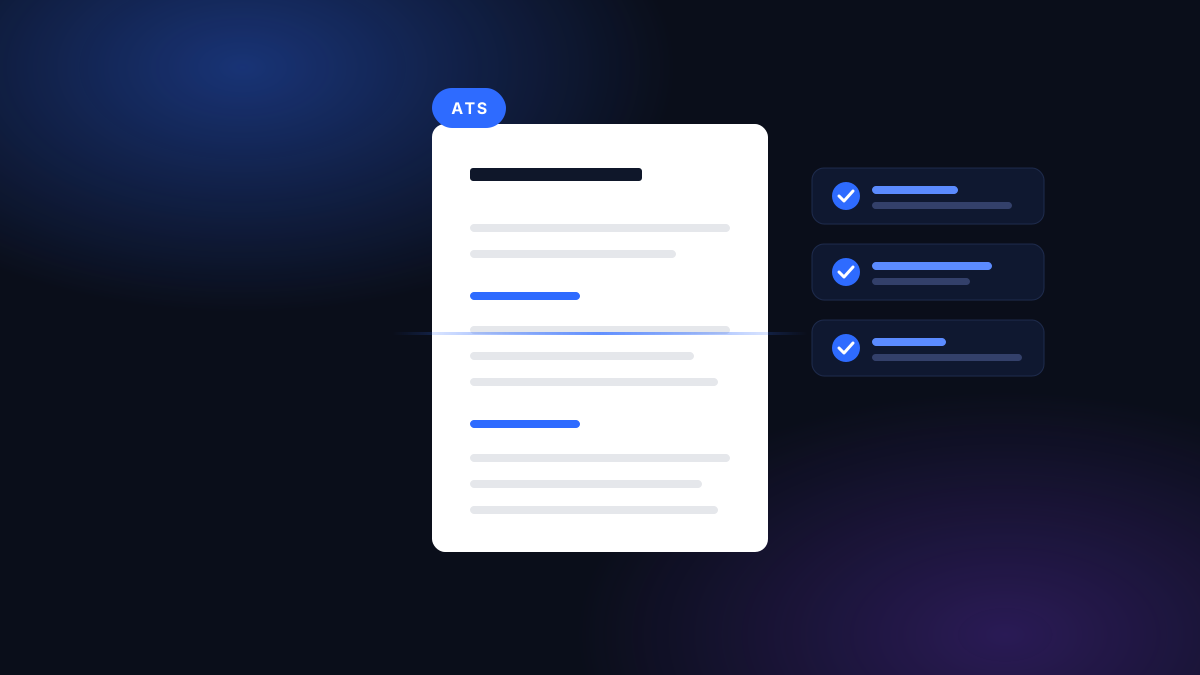
An ATS-friendly resume uses a simple structure, standard section headings, selectable text, and contact details in the document body. That layout helps the software extract your information correctly; relevant content then helps a recruiter understand your fit quickly.
That "75% never seen by a human" figure has been quoted everywhere for over a decade. Nobody ever sources it - because the trail leads to a resume service that closed its doors back in 2013, with no published methodology behind the number. It got repeated until it felt like fact. It isn't.
So let me tell you what's actually happening, what genuinely matters, and where the two free tools on this site fit. No fear, no magic score to chase.
Do ATS systems really auto-reject your resume?
Generally, no - at least not for the reasons people fear.
When a resume-software company surveyed 25 US recruiters across more than ten applicant-tracking platforms about how their systems were configured, the overwhelming majority said they don't auto-reject based on resume content at all. The filters that do run automatically are knockout questions you answer in the application form - work authorization, location, a required certification or licence. Miss "must be authorized to work in the US," and yes, you're out. But that's a checkbox you ticked, not your font.
The myth survives because it's a comforting story. If a robot silently rejected you, then your silence isn't about your application - it's about a rigged machine. The truth is less flattering and more useful: most resumes are read, briefly, by a tired human, and most simply don't stand out from the pile.
What an ATS actually does in 2026
Picture a filing cabinet with a really good search bar. You upload your resume; the software reads it and pulls out structured pieces - your name, contact details, job titles, dates, skills - and files them so a recruiter can search, sort, and shortlist. The major applicant-tracking systems are different brands doing the same core job.
Over 98% of Fortune 500 companies run one of these. That sounds ominous until you realise what it means in practice: the system's purpose is to organise applicants so humans can review them faster, not to reject them on the software's own authority. Even the newer AI "fit score" features that some platforms added recently are advisory - recruiters routinely ignore or manually override them, partly because the legal exposure of letting an algorithm make the call is something no serious employer wants.
It's the one sentence I wish every job seeker internalisedThe software decides how findable you are. A human still decides whether you're interesting.
That distinction is the whole game, and it splits neatly in two. Being readable gets your resume parsed and surfaced. Being relevant gets a recruiter to stop scrolling. Most advice obsesses over the first and ignores the second - which is backwards, because the second is where applications are actually won and lost.
Readable: the formatting that makes a resume ATS-friendly
This is the part the software genuinely cares about, and the good news is it's almost entirely mechanical. You're not trying to trick anything - you're just making sure the parser can read you cleanly. A few things matter, and they're boring on purpose:
- One column. Two-column and sidebar layouts get read left-to-right and scramble. This is the single most common parsing failure.
- Standard section headings. "Work Experience," "Education," "Skills" - not "Where I've Made My Mark." The parser looks for the conventional labels.
- Consistent, real dates. "Jan 2021 - Present," not "'21-now." Your dates feed the system's experience calculation; break them and you break your own ranking.
- Contact details in the body, not the header or footer. Many parsers skip the header/footer region entirely, taking your email with it.
- No tables, text boxes, graphics, or skill bars. Text inside an image is invisible to the parser. A skills "85% bar" reads as nothing.
- A standard font and a text-based file. Arial, Calibri, Georgia. Export a real text PDF or a DOCX - never a scanned image of a resume.
If you'd rather not eyeball all of this yourself, that's exactly what our free ATS check is for - upload your resume and it scores how cleanly the software can read it, with every point explained in plain language. No signup, no card.
So what's a good ATS score?
Here's where I'll be straight with you, because most tools won't be: a "score" is a checklist, not a verdict.
When a tool gives you an 82/100, that number isn't coming from a real applicant tracking system - no recruiter will ever see it. It's the tool's own estimate of how well you follow best practices. That's genuinely useful for catching the parsing mistakes above before they cost you. It is not a pass/fail gate, and it is absolutely not a prediction of whether you'll get the job.
So treat the score as a smoke detector. A high one means the software can read you and nothing obvious is broken - good, table stakes, move on. It says nothing about whether you're the right person for this role. Which brings us to the half that actually decides things.
Relevant: tailoring to the job, honestly
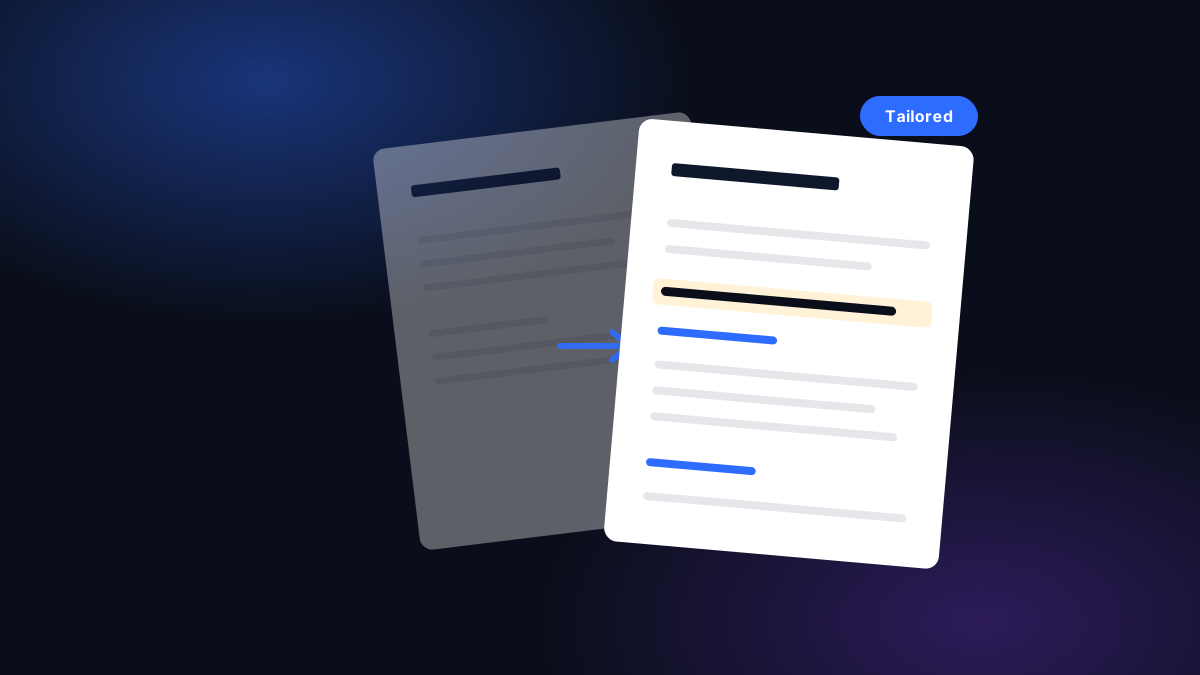
A clean resume gets read. A relevant one gets a reply. Relevance means the same real experience, re-weighted and re-worded so a recruiter sees the fit in the first few seconds. Companies that track millions of job seekers report that tailoring makes you several times more likely to land an interview than firing off one generic resume twenty times. That tracks with everything I've seen.
Tailoring is not keyword stuffing, and it's not lying. It's selecting which true things to put first, and describing them in the language the role uses. One before-and-after says it better than a paragraph of theory:
Nothing was invented. The vague claim became a specific one, and it borrowed the role's own vocabulary ("inbound demo requests"). That's the entire move - and it's the opposite of stuffing your resume with copied phrases, which reads as hollow to the human who follows the software. If you'd like the full method, I wrote a step-by-step on how to tailor your resume without lying.
What the data actually says
If a robot isn't the problem, why is job hunting so brutal right now? Volume.
CareerPlug looked at more than ten million applications across 2024 and found that roughly three in a hundred turn into an interview - and that it takes around 180 applicants to make a single hire. That's not a parser rejecting you; that's a lot of people applying for the same thing. The recruiter on the other end isn't lingering, either: the famous "six seconds per resume" stat is old and overstated, but even generous recent studies put it closer to thirty seconds. Either way, you're being skimmed, fast, by someone who's already a dozen resumes deep.
There's a more uncomfortable finding worth knowing. A Harvard/Accenture study found that 88% of employers believe qualified candidates get filtered out of their process. The cause, though, wasn't a rogue algorithm - it was the criteria humans set: automatic exclusions for employment gaps, job descriptions nobody had updated in years, filters tuned too tight. The machine did exactly what a person told it to. That's worth sitting with, because it points the fix back at things you can influence: clarity, relevance, and applying where you genuinely fit.
Do cover letters still matter?
More than people assume - though it's not universal, so I'll give you both sides.
In a survey of 625 US hiring managers, the large majority said the cover letter influences their interview decision, and nearly half read it before the resume. A separate, much larger recruiter survey was more lukewarm, with most saying it doesn't weigh heavily. So the honest read is: at big-tech-scale, automated funnels, a cover letter may do little. At smaller and mid-size companies - and for career changers, gaps, or anything that needs context - a specific, role-named cover letter that mirrors the actual requirements is one of the few levers most applicants never bother to pull. Which is precisely why pulling it works.
FAQ
Does my resume need to match the job description exactly?
No - and trying to is a mistake. You want to cover the role's genuine must-have skills and use its vocabulary where it's honestly true of you, aiming for roughly a 70-80% match. Copying phrases verbatim reads as hollow to the recruiter who follows the software, and that person is who actually decides.
Do ATS systems automatically reject resumes?
Rarely on content. The automatic filters are knockout questions in the application form - work authorization, location, required licences. Most systems don't auto-reject based on your resume's wording or formatting; they file it for a human to review.
What's a good ATS score?
A high score (say 80+) means a tool thinks the software can read your resume cleanly and nothing obvious is broken. It's a useful checklist, not a pass/fail gate and not a prediction of getting hired - no recruiter ever sees that number.
Should I send a PDF or a Word document?
Either works if it's text-based. Export a real PDF from Word or Google Docs, or send a DOCX - both parse reliably on modern systems. Never send a scanned image or a photo of a resume; the parser can't read it. If a portal asks for a specific format, give it that one.
Is keyword stuffing bad?
Yes. Hidden text, white-on-white keywords, and unnatural repetition are caught by modern parsers and read as desperate to the human who follows them. Use the role's real language inside genuine achievements instead.
How long do recruiters actually spend on a resume?
Less than you'd hope - somewhere between a quick skim and about half a minute on a first pass. That's why the top third of your resume, and its obvious relevance to the role, matter far more than anything buried at the bottom.
The pre-send checklist
Before you hit apply, run through this. It's the boring stuff that quietly decides whether the rest of your effort even gets seen.
- One column, standard headings, real dates, contact info in the body.
- Text-based PDF or DOCX - never a scanned image.
- Top third of page makes my fit for this role obvious at a glance.
- I used the role's vocabulary for skills I genuinely have.
- Every number on the page is one I can explain on the spot.
- Nothing here is something I couldn't defend in a 15-minute conversation.
None of this is about gaming a machine. The machine is mostly a filing cabinet. The whole job is to be readable enough that the software files you correctly, and relevant enough that the human doing the hiring stops scrolling and thinks this person actually read the role. Do that, on a real job, and see what comes back.
Common questions
Do applicant tracking systems really auto-reject 75% of resumes?
No - that figure was never backed by real data, and most ATS platforms don't auto-reject at all. An ATS is mainly a database recruiters search and filter. A human still decides who moves forward.
Does my resume have to be plain text to pass an ATS?
No. Modern parsers read standard PDFs and Word files fine. What trips them up is structure, not the file type: text baked into an image, contact details stranded in the header or footer, or fonts the parser can't map. A clean, single-column PDF is safe.
Do columns, tables, or icons break an ATS?
Sometimes. Multi-column layouts and tables can scramble the reading order, and icon-only contact details - a phone glyph with no number in text - get dropped. You don't need an ugly resume; just keep the important text as real, selectable text in a logical order.
What matters most for getting past the screen?
Relevance, not formatting tricks. The resume that ranks is the one whose actual content matches what the role asks for - the right skills and titles, in plain readable text. Formatting only matters when it stops a parser from reading that content.